Home

Saturday, May 29, 2010

Hand Wash Cold, Line Dry

As a wearer of hand knitted socks--some wool, some wool blends--I have been hand washing these precious pairs to save them from the ravages of the washer and dryer. (Read:  To save them from being felted.) The thing is, I haven't had a place to keep the socks separate from the rest of the laundry except for on a shelf next to the bed.  Imagine the beauty of hand-knit, dirty socks piling up in plain sight.  Truly a travesty for a modern, renaissance homemaker such as myself. 

I simply had to find a solution.

Or (ahem) I had to create a solution when I ran across the tutorial for a clothespin bag at My Lucky Chicken.  I modified the instructions a bit to make a bag befitting several pairs of bulky socks, and I added an embroidered patch on the front.  I've detailed my modifications below, but for now, for the sake of those visiting from Sew & Tell Friday, here's the finished product:
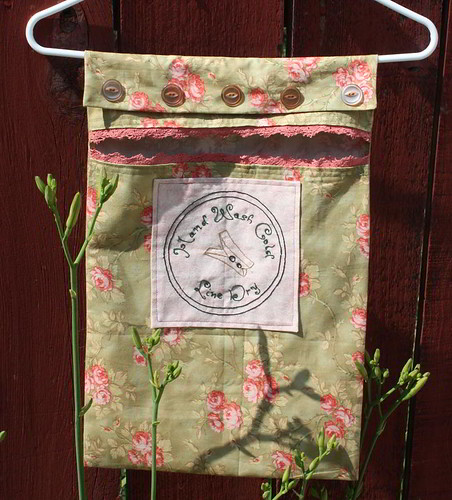
Hand Wash Cold bag

On the hanger, it's about 12" x 19".  Rather than beginning with a fat quarter, as the instructions suggest, I had yardage to work with.  So I cut off 13" from selvage to selvage and then sliced off the selvage edges themselves.
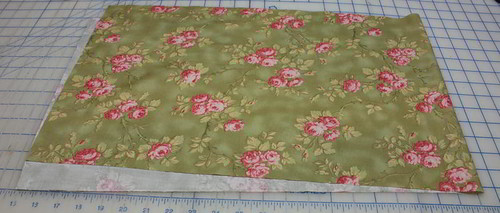
Hand Wash Cold bag 1b

I hemmed the short edges and added the pink lace trim.  About this time, my sewing machine broke.  Or, rather, I helped it along when I got tired of the needle not aligning itself correctly, ka-chunking itself through the fabric,  Hoping the problem could be solved by something simple, I tried to clean out all the fuzz from under the throat plate and from around the bobbin housing.  Somehow, however, I think I didn't replace all the parts correctly, and now I get a loopy mess under the fabric when I try to sew, and everything binds up.  Also, the needle still hits the edge of its opening in the throat plate--any needle does this;  it drives me crazy.

I wasn't thwarted for long, thankfully.  I pulled out my Featherweight and finished the bag.  I had planned to zigzag the embroidered applique onto the bag, but straight stitching became the order of the day.

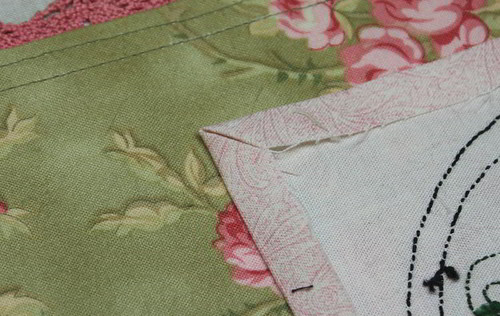
First I folded in the edges of the patch and then folded the corners into points.

Hand Wash Cold bag 4

Hand Wash Cold bag 5

I top stitched around the patch and then folded the bag into its parts, right sides together, so I could sew the long edges closed.  I folded the top down about 7" and then folded the bottom up to meet the top edge, but I don't have a precise measurement for that.
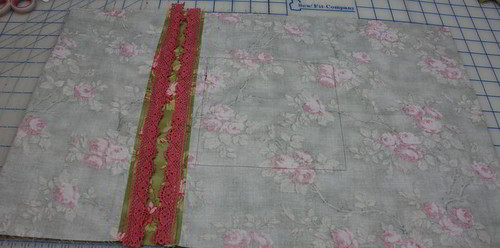
Hand Wash Cold bag 5b

I sewed the long edges and flipped it inside out.  The clothespin bag at My Lucky Chicken has button holes and buttons as its closure for hanging from a line or hanger.  My featherweight isn't button hole friendly.  Quite frankly, neither am I.  So I added large snaps and sewed buttons to the front as decorations.
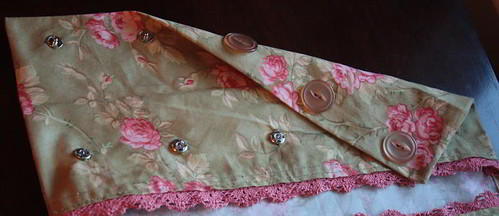
Hand Wash Cold bag 8

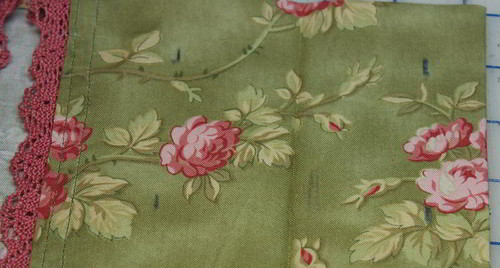
Again, I don't have a measurement for how far I folded this flap; I just eyeballed it.  I marked the placement of the snap components by slipping a folded sheet of dressmaker's carbon paper underneath the flap.  As I marked the top of the flap, corresponding marks were made underneath, so that all the places for buttons and snaps were marked at the same time.
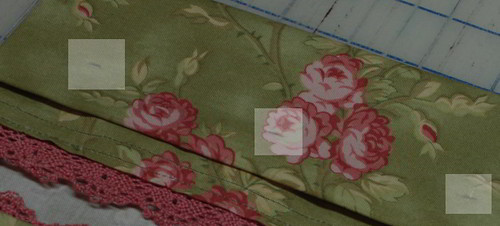
Hand Wash Cold bag 7
Marks in pencil for the buttons.

Hand Wash Cold bag 6
Blue carbon paper marks for the snap components.  (This is a sideways view.  The top of the flap is on the right in the photo.  The fold runs down the middle.)

And, here's the bag again, all done.  The bedside shelf is now safe from stinky, handmade socks.  Thank you, My Lucky Chicken!
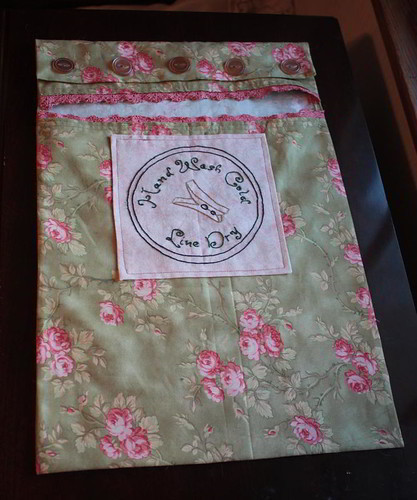
Hand Wash Cold bag inside

I've Linked to:

Monday, May 24, 2010

No pictures in this one

Folks, if I've learned anything from touring the blogs in the Quilt Festival, it is that I'm out of touch with the quilting world.  It has rocketed its merry way along one orbit while I've been putzing with yarn elsewhere.  The last all-out quilt I worked on was a Sunbonnet Sue variation that featured vintage Sue blocks and 1930s repro fabrics I'd had in my stash for an age.  

At that time, I was intimately familiar with the terms Fat Quarter and Charm Pack.  I'd just heard of Jelly Rolls but was not interested in buying them when I could whip out the equivalent number of fabric strips from my overgrown stash.  

But Layer Cakes, Turnovers, and Honey Buns?  They sound like reasons one would develop a fat quarter.  I had to google them to find this explanation.  Schnibbles has evidently become a commercial label for a kind of wall quilt that can be made from two charm packs.  

And the fashion of quilting has changed while I've been on hiatus.  Many modern quilts feature more unprinted fabrics and almost primitive piecing designs.  The favored fabric prints du jour seem to be large, simple graphics reminiscent of the late 1950s to early 1960s.  I could be off by a decade--1960s to 70s--but I try to forget the patterns of the 70s.  It was traumatic enough wearing those prints as a child, thanks so much.  (Nowadays, I'm not sure I could bring myself to lay out money to take them home.)

I find I continue to gravitate to scrap quilts, and piecing or applique designs that let the eye move along the surface when it's got nothing better to do.  (My standard for an interesting quilt is still one that could keep a mind busy while the body is sick in bed and the tv is out in the livingroom.)  These two joys are my goals when I make a quilt.  They're why I began quilting almost 21 years ago and why I am thinking of starting it up again.  I'm already brewing an idea for a bed quilt, and it involves using applique pieces my grandma cut out decades ago…in 1950s/60s prints, no less.  At least they're not from the 70s.

Saturday, May 22, 2010

Bloggers Quilt Festival


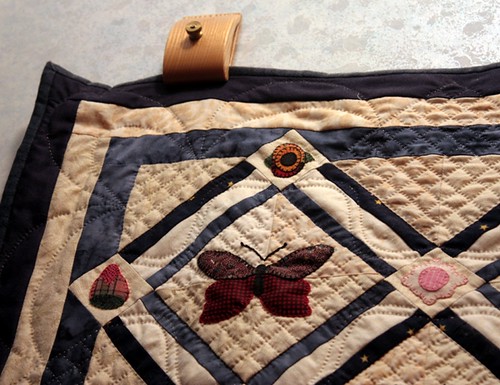
Behold, my first entry into the Bloggers Quilt Festival, a wee online quilt show organized by Amy of Amy's Creative Side.  Thank you for the opportunity, Amy.

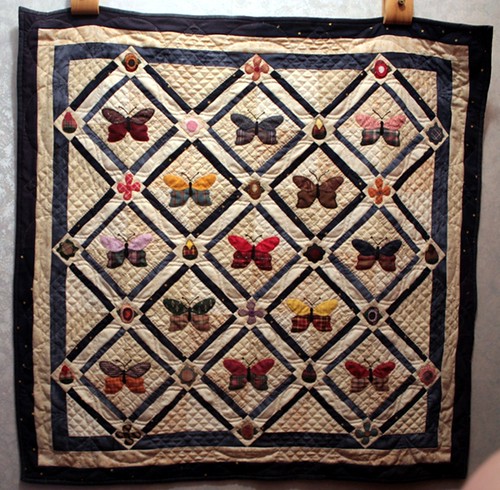
Lumberjack Butterflies mini 1

Lumberjack Butterflies II
Approx. 30" x 30"
finished June 2001

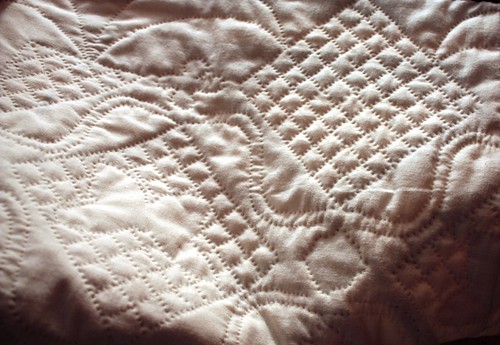
The lighting isn't so great in the photo because I took the picture where the quilt hangs, in my entryway.  I was on a kick awhile back of making miniatures of bed sized quilts I'd designed…but had not completed because they are, well, bed sized.  I hand quilt, as you can see in the photo below.  Hand quilting a miniature is much quicker than tackling its full-sized counterpart.

Lumberjack Butterflies mini 4

Each butterfly sports a plaid fabric from my stash…or, more likely, from my scrap pile.  I think every doodle pad flower on the quilt has a plaid, as well.  These are manly butterflies, you see.  Don't mess with 'em cuz they can take you out.

Lumberjack Butterflies mini 2

What I Learned in This Quilt
  • I think this is the first time I used a pieced background for applique.
  • I designed the butterfly pattern based on an illustration in a butterfly book I happened to have.  In the bed-sized version, the butterflies were taken from someone else's quilt pattern in a magazine.  So, designing my own butterflies makes the quilt feel more like it is mine.
  • I gave myself permission to use doodles in a quilt.
  • I'm pretty sure I used my Electric Quilt software to draw the curves in the sashing quilting and the quilted bunting along the outside borders.

Lumberjack Butterflies mini 3

Thank you!  Please enjoy perusing the other blogs on the Quilt Festival list.  Just click on the logo at the beginning of the post to find them.

Sunday, May 16, 2010

Babies!

Of my friends on Facebook, four have either just welcomed or are expecting the arrival of their latest family members. In my own family, two of my nieces will have their first babies this year.

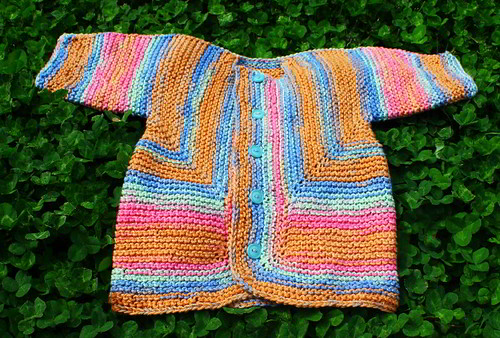
To that end, I have learned to knit a few baby sweaters. My first one down was a Baby Surprise Jacket.

Baby Surprise Jacket 1

The "surprise" is in the constructions because the sweater is knit in one piece, and the only seams needed are along the top of the sleeves. The knitting looks like an origami nightmare while in progress, but then it magically becomes this little garment for a little body.

Baby Surprise Jacket 1

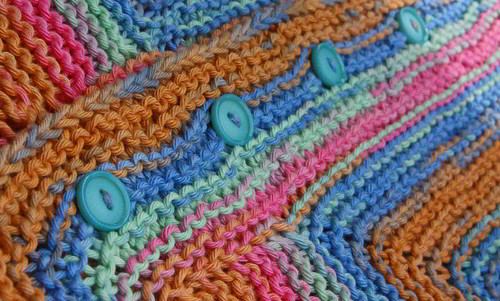
I ran across the buttons in my button stash (which overflows two quart jars, thank you very much). They are plastic, but vintage.  On a card of originally ten buttons, the price sticker read $0.17. How far back is that price? 1960s? '70s?

My first BSJ doesn't have a specified recipient. I'm guessing it'll fit a 12 month old, though, so maybe when one of my niece's babies is older, he or she will get this one.

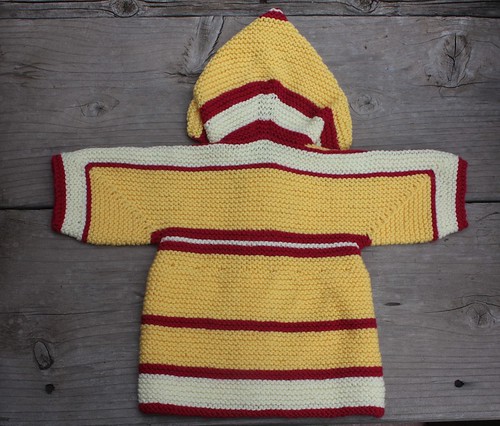
In the meantime, I knit another BSJ to fit a smaller baby. In yellow, as requested. But I added just a touch of fire to the sunshine.

BSJ Yellow Red 1

BSJ Yellow Red 4

I learned how to add the hood, and I would have added an i-cord tie and trim around the hood but I ran out of gas on this project. Mostly because I was knitting another yellow baby sweater that gave me fits. (Um, pun unintended and kinda stupid anyway.)

Top Down Baby Sweater

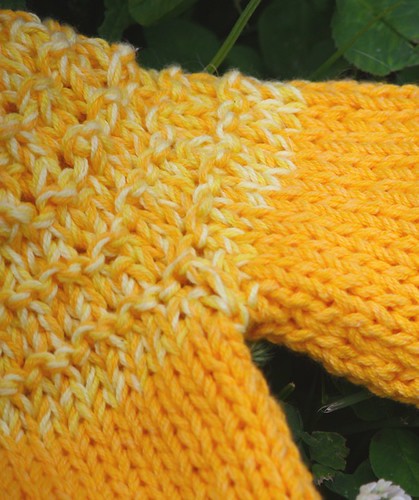
This sweater is knit from the hood down, and the yoke pattern is what hung me up. A few things were implied rather than specified on the pattern. One of them had to do with making a new stitch. For those of you indoctrinated in knitting, you have probably been taught, like I was, that when you make a new stitch by picking up the horizontal bar between two stitches and knitting it, you're supposed to knit into the back of it to twist the stitch and prevent a hole. This is second nature to me now. Well, in this pattern, a hole is supposed to be part of the design. A series of holes, actually, a pretty little line of them every few rows. I didn't catch onto this until well into the yoke. And I was not about to rip back to do the whole yoke over, so I just improvised. Two pattern repeats without holes, two repeats with holes, the last two repeats without. So, see, I meant to do that.

Top Down Baby Sweater 3

Not the best close up of what I'm talking about, but some of it is there.

So, now I'm baby-sweatered out. Done for now. They're fun, they're quick, but y'all are going to have to fend for your own baby clothes, you who are reproducing too quickly for me to keep up. ;)

Related Posts with Thumbnails